
Last Updated: October 28, 2026
Quick Summary
Research peptides are grouped by the biological activity researchers propose to study, including repair and recovery compounds, growth-hormone-releasing peptides, metabolic peptides, and cosmetic and signaling peptides. These categories describe proposed mechanisms, not proven human effects, and most evidence remains preclinical.
- BPC-157 and TB-500 have substantial preclinical interest but limited human clinical evidence and no FDA approval.
- Semaglutide and tirzepatide are approved medicines, while retatrutide remains an experimental compound.
- A certificate of analysis should show HPLC purity, mass-spec identity, and a lot number matching the vial.
- Research-grade does not mean pharmaceutical-grade, and most research compounds have unknown safety profiles.
- Emerald Science tests every lot to at least 99% HPLC purity and ships same-day before 2 PM EST.
Table of Contents
- How Research Peptides Are Grouped by Proposed Activity
- Types of Research Peptides: A Working Classification
- What the Evidence Shows for BPC-157 and TB-500
- Growth-Hormone-Releasing Peptides: CJC-1295, Ipamorelin, and IGF-1
- Retatrutide Research and the Metabolic Peptide Pipeline
- Research Peptide Purity Testing: What the Certificate Should Show
- Research Peptide Safety and Regulation: Approved Drugs vs. Experimental Compounds
- Ordering Verified Research Peptides for Your Next Assay
- Frequently Asked Questions
How Research Peptides Are Grouped by Proposed Activity
Research peptides are short amino-acid chains studied for their ability to act as cellular signals, and the different classes are grouped by the biological activity researchers propose to investigate. These compounds can be organized by proposed mechanism, not by marketing claim.
That distinction matters. A vial labeled “repair” or “metabolic” tells you what researchers hypothesize, not what has been proven in humans.
Below, the major types of research peptides are grouped into working categories, with an overview of evidence and how to read a certificate of analysis.
Types of Research Peptides: A Working Classification
The clearest way to sort research peptides is by the pathway they are studied against. A research peptide is a synthetic amino-acid chain manufactured for controlled experimental use, not for human consumption. Most catalog compounds fall into four working groups:
- Repair and recovery compounds studied for tissue and inflammation pathways
- Growth-hormone-releasing peptides studied for pituitary signaling
- Metabolic peptides studied for appetite, glucose, and body composition
- Cosmetic and signaling peptides studied for skin and cellular repair models
This classification is functional, not official. Treat any grouping as a lab convenience.
Repair and Recovery Compounds
Repair-focused research peptides are studied for how they interact with tissue-repair and inflammation signaling in preclinical models. BPC-157 and TB-500 are the two most discussed. Researchers typically examine cell migration, angiogenesis, and inflammatory markers in vitro or in animal models.
What most guides miss: nearly all of this work is preclinical. Human clinical evidence is thin, and no repair peptide holds FDA approval for therapeutic use.
Growth-Hormone-Releasing and Metabolic Compounds
Growth-hormone-releasing peptides are studied for their effect on pituitary GH secretion. Metabolic peptides are studied for appetite, glucose regulation, and weight management pathways. The two groups overlap less than people assume.
- GH-releasing: CJC-1295, ipamorelin, and IGF-1 pathway research
- Metabolic: retatrutide, semaglutide, and tirzepatide research
One nuance: semaglutide and tirzepatide exist as approved medicines, while retatrutide remains an experimental compound. That regulatory split is the single most misunderstood point in this field.
What the Evidence Shows for BPC-157 and TB-500
The honest answer: BPC-157 and TB-500 have substantial preclinical research interest but limited human clinical evidence, and neither is FDA-approved. Researchers studying tissue repair and recovery pathways should treat both as experimental compounds with an uncertain safety profile.
What separates a useful guide from a list is labeling the evidence for each compound. Use a simple three-tier label in your own notes:
- Clinical evidence, data from controlled human trials
- Preclinical evidence, animal or cell-culture data only
- Speculative, mechanistic hypotheses without direct experimental support
Applied to these two compounds:
| Compound | Proposed mechanism | Research stage | Evidence label | Approval status |
|---|---|---|---|---|
| BPC-157 | Studied for gastrointestinal and tissue-repair signaling; researchers examine cell migration, angiogenesis, and inflammatory markers | Mostly animal and cell-culture models | Preclinical | Not FDA-approved |
| TB-500 | Thymosin beta-4 fragment studied for cell migration and actin regulation | Mostly animal and cell-culture models | Preclinical | Not FDA-approved |
BPC-157 is a synthetic peptide studied for gastrointestinal and tissue-repair models. TB-500, a fragment related to thymosin beta-4, is studied for cell migration and actin regulation. Readers can also explore the combined BPC/TB research product offering. Most published work uses animal or cell-culture models, which means the evidence label for both is preclinical, not clinical.
A common mistake is citing a rodent study as if it predicts human outcomes. It does not. The gap between a positive animal result and a confirmed human effect is where most marketing claims break down. When you read a supplier page that says a repair peptide “supports healing,” ask which tier the underlying data sits in. If the answer is preclinical, the claim should be written as a research question, not an effect.
Do not treat a category label such as “repair peptide” as a proven effect. The label describes the pathway researchers propose to study, not an outcome established in humans.
Growth-Hormone-Releasing Peptides: CJC-1295, Ipamorelin, and IGF-1
GH-releasing peptides are studied for how they trigger growth hormone secretion through pituitary signaling. CJC-1295 and ipamorelin are the most common research compounds in this class; IGF-1 sits downstream as a growth-factor pathway marker rather than a releasing peptide itself.
These compounds are frequently studied together because they act on different points of the same axis. CJC-1295 is examined for extended half-life signaling, ipamorelin for receptor selectivity, and IGF-1 for downstream biological activity. Mapping each compound to its point on the axis keeps a study design honest:
| Compound | Point on the GH axis | Proposed mechanism | Evidence label | Approval status |
|---|---|---|---|---|
| CJC-1295 | Upstream, pituitary | Studied for extended half-life growth-hormone-releasing signaling | Preclinical | Not FDA-approved |
| Ipamorelin | Upstream, pituitary | Studied for receptor selectivity in GH release | Preclinical | Not FDA-approved |
| IGF-1 | Downstream | Growth-factor pathway marker studied for downstream biological activity | Preclinical for research use; IGF-1 itself is a regulated biologic | Not a research peptide for human use |
Watch out: stacking assumptions from separate studies onto a combined protocol is speculation, not evidence. Treat each compound’s data on its own. A finding that CJC-1295 extends signaling half-life does not tell you how ipamorelin behaves in the same model, and neither result establishes a human outcome.
A category name such as “GH-releasing peptide” describes a research question about pituitary signaling. It does not mean the compound has been shown to raise growth hormone in humans or that it is approved for any use.
For labs ordering these compounds, confirm the certificate of analysis lists mass-spec identity and HPLC purity before you design an assay around them. The mechanism is interesting; the human evidence is early.
Retatrutide Research and the Metabolic Peptide Pipeline
Retatrutide research focuses on a triple-agonist mechanism studied for appetite and glucose regulation in metabolic models, and it remains an experimental compound without FDA approval. It sits in a pipeline alongside approved GLP-1 medicines, which is exactly where researchers and readers confuse the two.
The distinction is regulatory status. Semaglutide and tirzepatide are approved prescription drugs. Retatrutide is investigational.
For labs examining purity of this compound specifically, our retatrutide lab guide to purity walks through what to check before an assay. The mechanism is interesting; the evidence is early. Do not let enthusiasm outrun the data.
Research Peptide Purity Testing: What the Certificate Should Show
Research peptide purity testing uses analytical methods to assess a compound’s identity and purity (Liquid Chromatography-High Resolution Mass Spectrometry for Peptide Drug Quality Control). A COA can show an HPLC purity result, a mass-spec identity confirmation, and a lot number that matches the vial.
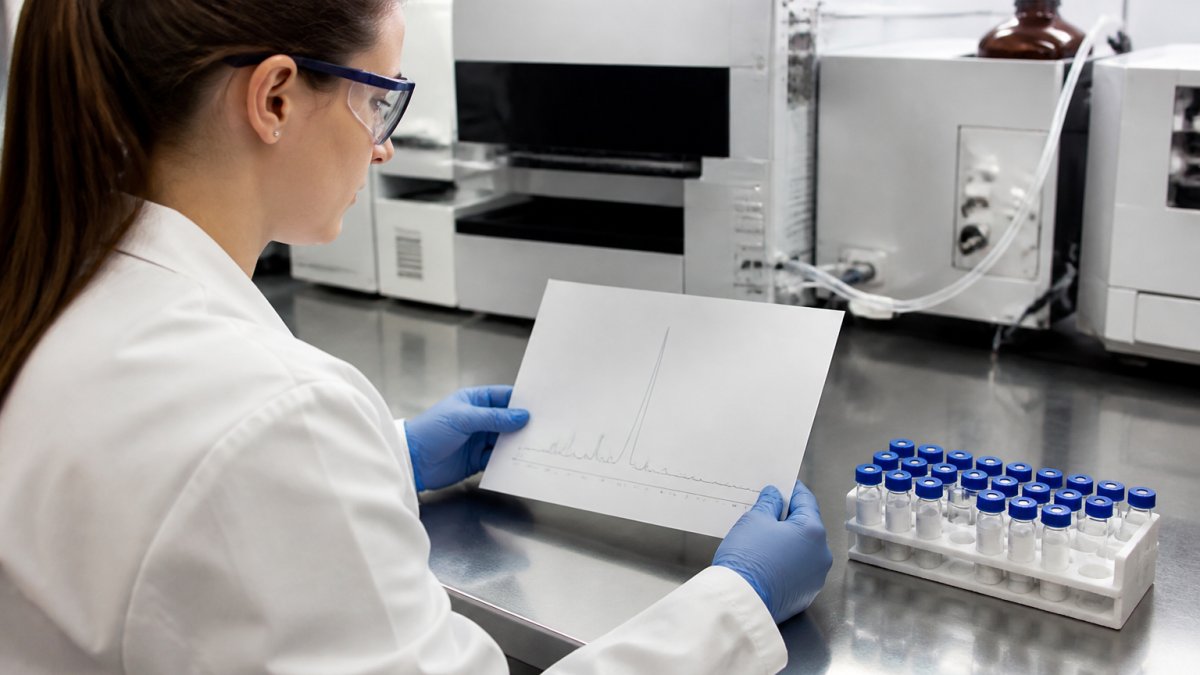
Here is what to demand on every certificate:
- HPLC purity percentage with the method stated
- Mass-spec identity confirming molecular weight
- Lot or batch number matching the physical vial
- Testing date and the lab that ran it
- Storage and handling notes
If a supplier claims 99% purity but cannot produce lot-matched data, treat the claim as unverified. For a step-by-step method, see our 7-step guide to verifying peptide purity. If you are weighing whether the paperwork is worth the effort, we also cover whether COAs are worth the paperwork.
Research Peptide Safety and Regulation: Approved Drugs vs. Experimental Compounds
Research peptide safety and regulation involves distinguishing approved peptide medicines from compounds intended for research use. Research-use labeling does not establish that a compound is safe for human use.
The practical risks researchers should document:
- Unknown safety profile for most research compounds
- Purity and identity variance between suppliers
- No dosing or administration guidance exists for human use
- Interaction data is largely absent
A common mistake is assuming “research-grade” means pharmaceutical-grade. It does not. The FDA’s framework for peptide drug approval draws the line clearly, and researchers should cite regulatory status honestly in any protocol.
Ordering Verified Research Peptides for Your Next Assay
When ordering research peptides, consider documented purity and lot traceability. At Emerald Science, every lot is independently tested and mass-spec verified to at least 99% HPLC purity, with a unique batch number on every product.
We ship same-day for orders placed before 2 PM EST. If you are still vetting suppliers, our guide to vetting research peptide suppliers covers the questions to ask before your first order.
A quick reference for what to check:
| Check | What to Confirm | Why It Matters |
|---|---|---|
| Purity | HPLC ≥99% with method | Assay reproducibility |
| Identity | Mass-spec match | Correct compound |
| Traceability | Lot number on vial | Record integrity |
| Documentation | PDF COA per lot | Grant compliance |
Frequently Asked Questions
What is the difference between a research peptide and an approved medication?
A research peptide is intended for laboratory and in-vitro work. Research use should be distinguished from human use.
How can researchers assess the purity and identity of a research peptide?
Check the HPLC purity and mass-spec identity information, and compare the product’s unique batch number with the documentation available for that lot.
Is retatrutide a research peptide or an approved medication?
The supplied information does not establish retatrutide’s regulatory status or research findings. Researchers should verify relevant information using authoritative sources.
What should a purity certificate include for research peptide work?
Check for HPLC purity information, mass-spec identity verification, and a batch number. Emerald Science states that its lots are independently tested, mass-spec verified, and have at least 99% HPLC purity.
The real challenge is not finding peptides; it is finding a supplier whose numbers survive your lab’s independent testing. Emerald Science builds every lot around that standard: independently tested batches, mass-spec verified identity, unique batch numbers, and same-day shipping before 2 PM EST. Get started with Emerald Science and run your next assay on documented, verifiable material.